

Major weight loss can be life-changing, but the body does not always settle into the shape patients expect. After the weight comes off, stretched skin may remain around the abdomen, arms, thighs, breasts, back, or lower body.
Some areas may look deflated, while others may still hold stubborn pockets of fat. This can feel frustrating after so much discipline and progress. That is where body contouring becomes an important next step. Post-weight loss procedures can remove excess skin, refine shape, restore proportion, and help patients feel more comfortable in the body they worked so hard to change.
Continue reading to understand how surgery after weight loss works and how patients can decide which procedure should come first.
After Weight Loss
Surgery after weight loss is a group of procedures designed to address loose skin, stretched tissue, and contour changes after significant weight reduction. After major weight loss, the skin may not fully retract.
This is especially common when weight loss is substantial, when the skin has been stretched for years, or when natural elasticity has declined. Even with exercise, patients may still experience skin folds, irritation, heaviness, or areas that do not match their new size.
These procedures are not about replacing healthy habits. They are about addressing the physical effects that weight loss alone cannot always correct.
For many patients, body contouring is the final phase of transformation: the point where the body begins to reflect the progress already made.
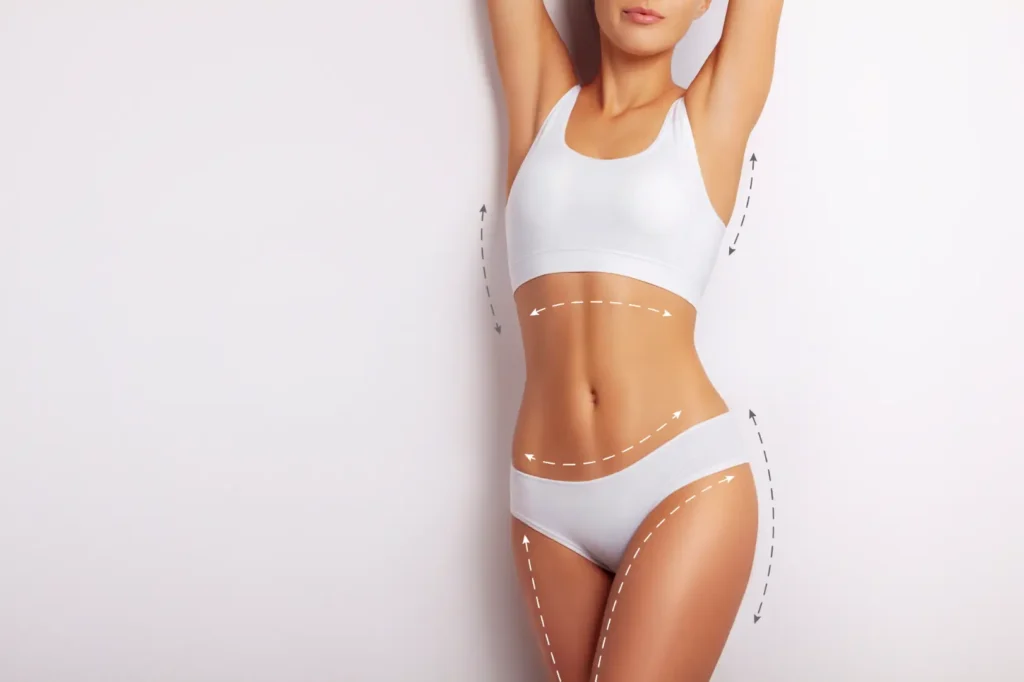
Why Prioritizing Matters
Choosing which procedure comes first is not only a cosmetic decision; it is a planning decision. Patients often have more than one area they want to improve. The abdomen may bother them most in clothing.
The arms may feel most visible in photos. The breasts may look deflated. The thighs may chafe. The lower body may have loose skin that affects comfort. Because of this, staging procedures in the right order can make recovery more manageable and results more balanced.
A surgeon may recommend starting with the area that causes the most functional concern, the area that will create the largest overall contour improvement, or the area that influences other procedures.
There is no single order that applies to everyone. The right sequence depends on anatomy, safety, recovery time, lifestyle, and goals.
1. Start With Weight Stability
Before choosing a procedure, patients need to consider whether their weight has stabilized. Body contouring is usually most effective when patients are at or near a stable weight. If weight continues to change significantly after surgery, results may be affected.
Additional weight loss can create more loose skin, while weight gain can stretch tissues again. Stability also gives the surgeon a clearer view of what needs to be corrected. Is the concern loose skin? Residual fat? Muscle separation? Volume loss? Once the weight has leveled out, these questions become easier to answer.
For patients still losing weight, non-surgical support may be discussed temporarily. Options like fat freezing (cryolipolysis) or other liposuction alternatives may appeal to some patients with small pockets of fat, but they cannot remove significant loose skin. This distinction matters after major weight loss because skin excess is often the main concern, not fat alone.
2. Prioritize the Abdomen
For many post-weight-loss patients, the abdomen is the first area to address. The abdomen often carries the most visible loose skin after weight loss. Patients may also have weakened or separated abdominal muscles, stretch-related tissue changes, and overhanging skin that affects clothing, movement, and comfort.
A tummy tuck, also called abdominoplasty, can remove excess skin, tighten the abdominal wall when needed, and create a smoother, flatter midsection. This is why abdominal contouring often comes first. Improving the abdomen can dramatically change the way clothes fit and how the body looks from the front and side. It can also provide a stronger foundation for later procedures.
Some patients may also want a waist slimming treatment or liposuction refinement around the flanks. When appropriate, contouring around the waist can help create a more defined transition between the torso and hips.
However, the surgeon must determine whether fat removal, skin removal, or muscle repair is the true priority. If loose skin is significant, a tummy tuck may be more appropriate than non-surgical fat reduction alone.
3. Consider a Belt Lift
A belt lift, also called a lower body lift, may be recommended when loose skin goes beyond the abdomen. Some patients do not only have skin laxity in the front of the body. They may also have loose tissue around the hips, buttocks, outer thighs, and lower back. In these cases, a tummy tuck alone may improve the abdomen but leave the surrounding areas unbalanced.
A belt lift addresses the body more circumferentially. It removes excess skin around the midsection and lower body, helping create a smoother contour across the abdomen, hips, buttocks, and thighs. For patients after massive weight loss, this can be one of the most transformative procedures.
The decision between a tummy tuck and a belt lift depends on where the loose skin sits. If the concern wraps around the body, a belt lift may provide more complete improvement. If the concern is mostly abdominal, a tummy tuck may be enough.
This is a key reason sequencing matters. Addressing the torso first can help establish the body’s central shape before moving to arms, breasts, thighs, or other areas.
4. Restore the Breasts
Weight loss can significantly change breast shape, size, and position. Some patients lose breast volume and feel deflated. Others experience sagging due to stretched skin and tissue descent. The right breast procedure depends on whether the patient needs volume, lift, or both.
Breast augmentation after weight loss may be appropriate when the main concern is lost fullness. A breast lift may be needed when the breasts sit lower or the nipples have shifted downward. A breast lift with implants can address both sagging and volume loss, creating a more lifted and proportionate breast shape.
This procedure may come early in the sequence if breast changes are a major emotional or clothing-related concern. For some patients, restoring breast proportion helps the upper body feel more balanced after the abdomen or waist has been improved.
The goal is not simply to make the breasts larger. It is to restore shape, position, and proportion in a way that fits the patient’s new body.
5. Address the Arms
The upper arms are often one of the most visible reminders of weight loss. Loose skin in the arms can be difficult to hide, especially in warm climates like Las Vegas, where sleeveless clothing is common. Patients may describe this skin as hanging, loose, or uncomfortable. An arm lift, also called brachioplasty, removes excess skin and fat from the upper arms to create a firmer, more toned appearance.
An arm lift may be prioritized when the arms affect clothing choices, confidence, or daily comfort. Patients who avoid sleeveless tops or feel self-conscious lifting their arms may feel a major quality-of-life improvement from this procedure.
However, arm lift scars must be discussed clearly. The tradeoff for removing loose skin is a surgical scar along the upper arm. For many patients, the improved contour is worth it, but the decision should be made with realistic expectations.
6. Refine the Thighs
The thighs can be challenging after weight loss because loose skin may affect both appearance and comfort. A thigh lift targets excess skin and tissue in the upper legs. Patients may consider this procedure if they have sagging inner thighs, friction, difficulty with clothing, or a heavy feeling in the legs.
The procedure can create smoother, firmer-looking thighs and improve overall lower-body proportion. Thigh procedures may be staged after the abdomen or lower body because torso contouring can influence how the thighs appear. For example, a lower body lift may already improve some outer thigh laxity. If inner thigh skin remains, a thigh lift can be planned as a separate step.
This staged approach helps avoid overtreatment and allows the surgeon to see what still needs refinement after earlier procedures have healed.
7. Improve the Back
Loose back skin can create folds around the bra line, upper back, or lower back. A back lift may be helpful for patients with sagging skin or stubborn rolls that persist after weight loss. It can create a smoother, more sculpted back profile and improve how clothing fits.
This may be especially meaningful for patients who feel limited in fitted tops, dresses, or swimwear. Back contouring can sometimes be combined with other upper-body procedures, depending on safety and surgical time.
It may also be staged separately when more extensive correction is needed. For patients who still have localized fat along the back, liposuction may be discussed. However, if loose skin is the main concern, fat removal alone may not create the desired smoothness.

A Stronger Next Chapter
Weight loss can change health, confidence, and daily life, but loose skin and contour changes may remain after the scale has moved.
At Pancholi Cosmetic Surgery in Las Vegas, NV, patients can explore body contouring after weight loss through a personalized surgical plan that considers comfort, proportion, recovery, and long-term goals. Whether the first step is abdominal contouring, a lower body lift, breast surgery, arm lift, thigh lift, back lift, or fat transfer, the right order should be built around the patient’s body and priorities.
After major weight loss, the goal is not simply to remove skin. It is to help the body feel more complete, balanced, and aligned with the transformation patients have already achieved.
Get in touch with us today to schedule your consultation!